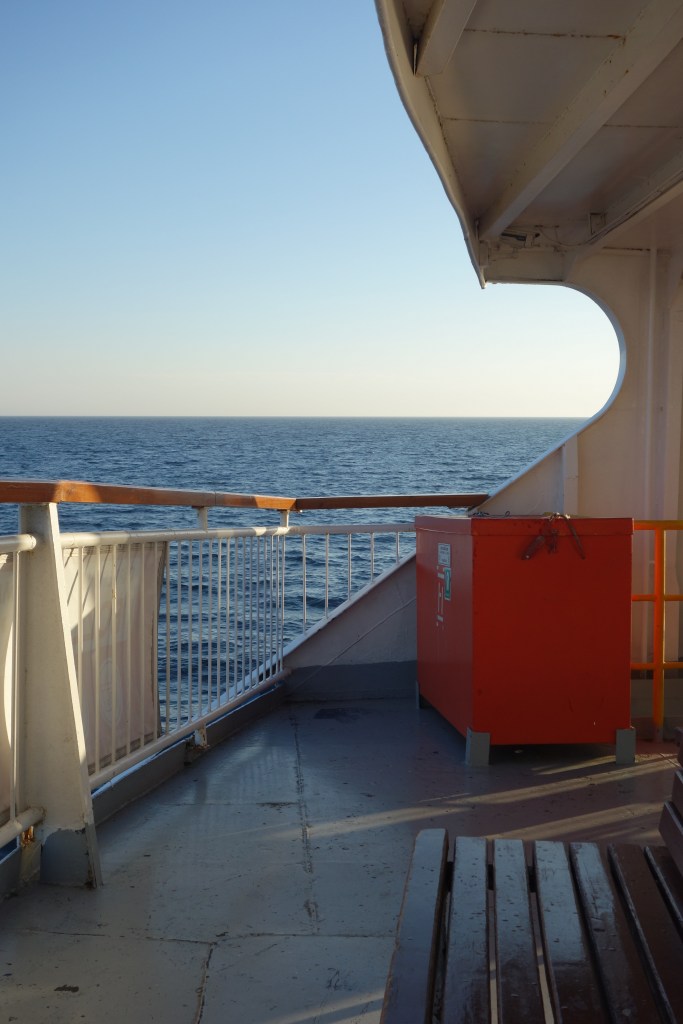
It takes around half-an-hour to reach the island of Bozcaada from the Geyikli port on the mainland, the vast glistening expanse of the Aegean a constant visual companion. The Bozcaada Castle is one of the first things that catches the eye, a bold protagonist that represents the island’s long history, which stretches back to classic antiquity; from the Romans to the Byzantines, the Republic of Venice to the Ottomans. Also known as Tenedos, as mentioned in Homer’s Iliad, when wandering around the island’s cobblestoned town center, the remaining influences of its formerly Greek inhabitants make themselves known. The old stone houses and the many taverns with their wooden tables and chairs where fresh seafood, meze, rakı (anise-flavored spirit) or wine are served nightly. The bell tower of the nineteenth century Church of St. Mary, one of the two remaining Orthodox churches on the island, protrudes amongst the leveled orange tiled roofs. On the main square, people sit around and enjoy their coffee and sweet or savory pastry at Petit Café, whilst a few streets over others are leafing through books and magazines inside Bozcaada Kitapçısı (Bozcaada Bookshop). In the evenings, people gather at bars such as Salhane, a former abattoir in a hue of lemon-yellow facing both sea and castle, to enjoy glasses of local wine or a few cocktails.
Speaking of local wine, this is Bozcaada’s other protagonist, with a viticulture history that goes back almost 3,000 years. Winemakers old and new successfully carry on the tradition, especially endemic grape varieties including Çavuş, Vasilaki, Kuntra and Karalahna. On Lale Street, the smell of wine becomes distinct, and it is here that the Talay wine shop and production facility can be found, in operation since 1948. A few streets later, Amadeus, run by the Austrian winemaker Oliver Gareis, also offers wine tastings, while the Çamlıbağ family winery has been around since 1925 and is operated by the fourth generation. However, the island’s most famous vineyard continues to be Corvus, established by the architect Reşit Soley in 2002, successfully reviving the island’s wine tradition and bringing it to an internationally recognized and award-winning standing.
It was Soley’s tenacity and Bozcaada’s long history in viticulture that inspired and brought the aspiring winemaker İlke Yasa to Corvus vineyards in 2021, located right by Tuzburnu Bay, one of the island’s many beautiful swimming haunts. “For me, the best time on the island is during April, May, September and October,” she says, “the most crowded time is August, which intersects with the bustling grape harvest. During the day you spend hours under the sun among the vines and at night you meet up at beaches that can’t be reached by car, bonfires are lit and people dance all night. Especially during the annual Bozcaada Jazz Festival, the whole island turns into an open-air music venue, so many lovely people arrive, so much great conversation, rakı and wine.”
On one of the island’s highest peaks, the Sunset Houses vacation homes look out over the sea between the valley and the dusk that paints everything with its descending orange glow. At night, the stars can be seen in all their vigor without any disruption, only the changing winds present to remind one that this is an island in the midst of the Aegean Sea. During the day, the island’s many hiking trails lead the way through vineyards and orchards where figs, pomegranates and olives bloom, while the smell of rosemary, wild oregano and sage is omnipresent.
For all these reasons and more, Bozcaada remains one of the Aegean’s most unspoilt islands and when the pandemic arrived in 2020, it became a point of escape for many city-dwellers who yearned for more space and a connection with nature. It was during this time that Sinan Sökmen– founder and CEO of the award-winning boutique travel agency Istanbul Tour Studio–and his wife Seda Domaniç– founding editor-in-chief of Vogue Turkey–decided to buy a house on the island. Having met and married on the island, a strong emotional connection to Bozcaada made their decision easier, as well as its pristine beaches and fresh culinary offerings. “We particularly love Sulubahçe Beach in the morning hours, where it feels like you’ve just landed on an isolated beach in the Maldives,” says Domaniç, “followed by a long Turkish breakfast at Rengigül whose chef, Türkan Çim Işık, prepares special breakfast salads, pastries and of course the famous island jams according to the month’s best produce. We also love a late seafood lunch or early dinner at Yalova Restaurant; homemade Turkish delicacies such as mantı, çiğ börek and zeytinyağlı dolma, at Hanımeli; a full course chef menu in the vineyards of Maya; cocktails at Sapa; and late-night music and DJ performances at 49 Polente, which often turns into a fun street party.”
Inside a stone house built in 1876, one of the island’s most fascinating collections hides behind a bright red door. The Bozcaada Museum is filled with more than 15,000 photographs, documents, maps, etchings and objects that recount the island’s long history. After having come upon a black-and-white etching of Tenedos and four postcards at a second-hand bookshop in Istanbul in 1988, the antiquarian Hakan Gürüney set out on an intensive and systematic journey of collecting everything he could find concerning the history of the island. He founded the museum in 2005 to display the amassed collection of objects and donations from islanders who recognized the importance of sharing their own personal family tales. Upstairs, each room recounts the historic events that shaped the island, while the basement reminds one of the Museum of Innocence, with glass displays filled with everyday island objects of the past from vintage groceries to toys to wine bottles and so much more.
Once the ferry sets off again to the mainland and the islanders are once again separated from the visitors, one wishes to come back, to see what Bozcaada is like outside the summer. When only a few places are open and only the people who live there wander among the streets, minding their own business, perhaps thinking about the past, or looking forward to the future, when the island is filled again with those who wish to escape their lives, and live isolated on their own island, even for a few days.
Photo by me
 Feride Yalav-Heckeroth