At the intersection of Germany, Switzerland and Austria the around 539 square kilometers of Bodensee (Lake Constance) stretch out like a contained sea. With the Alps always looming in the distance, the German shore is speckled with medieval towns with their half-timbered houses and the peaks of historic churches marking main squares. In the summers, thousands of German tourists flock to the beaches, crowding waterfront hotels and vacation homes.
But in the autumn, winter, spring, and further into the backcountry, things are exceptionally serene amongst the farms, small villages among rolling hills covered in forests and farmlands, fruit orchards and vineyards. It is also here that biodynamic (Demeter) farming is in the forefront and for travelers looking for a sustainable reprieve, Bodensee is utopia.
Where to Shop
One of the world’s oldest biodynamic farms, Hofgut Rengoldshausen has been active since 1932 and continues to thrive as a living and working community. Around 100 people work here in the summers, whether it’s in gardening, agriculture, marketing or in the farm shop. One of Rengo’s special services includes the Grünen Kiste (Green Box), supplying seasonal produce on a fixed day of the week to customers in the surrounding areas. In the serene inner courtyard, visitors can buy freshly harvested produce and agricultural products from the farm’s own cultivation as well as products from surrounding farms in the farm shop. Right next door, the farm café offers simple lunches, pastries and homemade cakes from farm-fresh ingredients.
A short stroll away, and past the Waldorf School Überlingen, the Naturata shop is one of the area’s oldest and biggest organic stores, established in 1976, with its current location open since 1992. Designed by the renowned Hungarian architect Imre Makovecz, the structure–with its steep roof, large windows and interior system of twelve-meter-high filigree wooden struts supported by solid tree trunks embedded in the foundation–is Gothic, almost sacral in its feeling. Apart from a comprehensive assortment of strictly organic and natural goods–with a special focus on fresh Demeter products–Naturata also has a natural clothing shop for the whole family, a bookshop, six guest rooms on the upper floor and a restaurant and café serving a daily menu of wholesome and organic dishes.
Part of the Camphill Movement (an international organization of residential communities and schools, which provide education, employment and daily support for adults and children with developmental disabilities and other special needs) the biodynamic Lehenhof farm is a village community with around 400 people living and working together. Located in the village of Untersiggingen, the farm’s own Lehenhof Bioladen (organic market) is a sprawling space of 400 square meters filled with organic products, including their own baked goods, cheese and dairy products and seasonal vegetables.
Available in both of these organic markets are the products of Sonett, an international company based in the Bodensee region’s Deggenhausertal municipality and founded in 1977 with the idea of creating environmentally-friendly washing and cleaning products. By abstaining from petrochemical raw materials, enzymes and genetic engineering, Sonett’s products contain biodegradable raw materials such as essential oils derived from organic plants and purely plant-derived soaps. Winner of the German Sustainability Prize 2024, the company’s laundry, cleaning, dishwashing and body care products, packaged in their signature bright colors, work in harmony with nature.
Close to the village of Daisendorf and out in the undulating green fields, Andreashof is a little paradise of blooming flower gardens. The biodynamic farm specializes in the production of Licht Yam (light root) or Chinese yam (Dioscorea batatas or Chinese Shan Yao), which, according to traditional Chinese medicine, is believed to strengthen the Qi (vital force) with a harmonizing effect on body and mind. In the Andreashof shop, natural cosmetics, teas and herbs, all with powerful Lichtyam extracts, are on sale. Also housing a café, locals come here on the weekends for the classic Kaffee und Kuchen (coffee and cake) enhanced with light root extracts.
Where to Eat, Drink and Stay
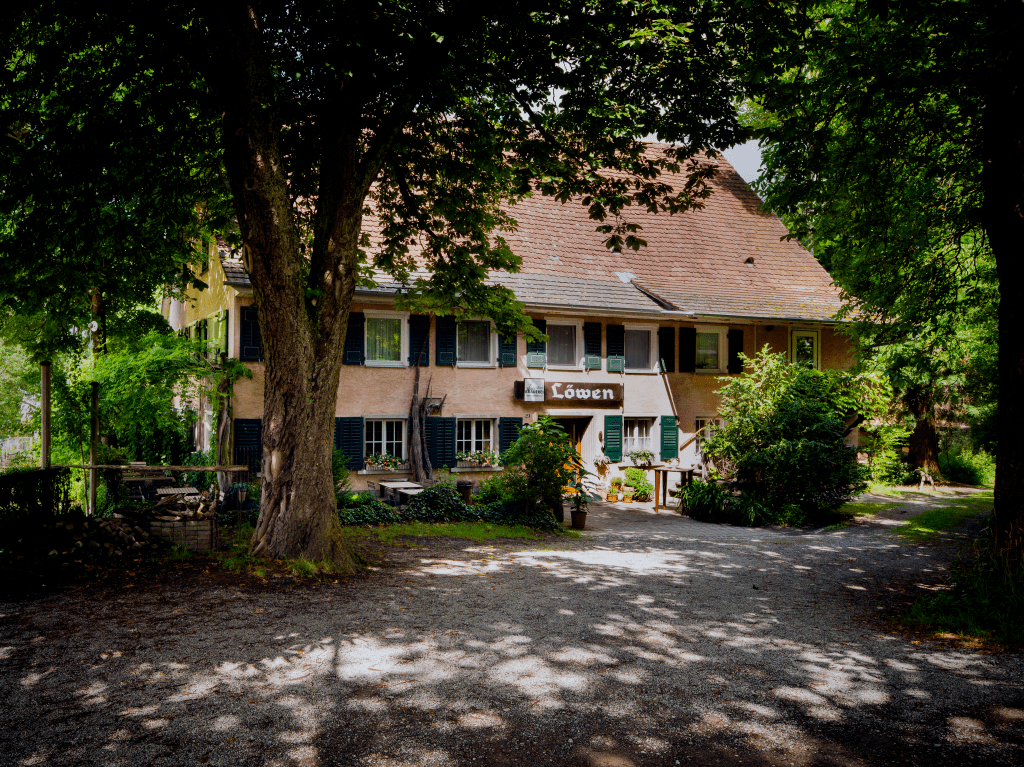
A truly down-to-earth family endeavor currently in its fourth generation, Löwen Altheim is one of the region’s best-kept local secrets in the small hinterland village of Altheim. Formerly run by the autodidact chef Isolde Pfaff, the kitchen now belongs to her son Roman who continues her legacy of gourmet dishes that excel in taste due to a sincere focus on natural, regional and seasonal ingredients of the freshest order. After having trained in kitchens in Stuttgart, Zermatt and Amsterdam, Roman returned to take over the family business in 2017, adding his very own contemporary touches, without losing any of Löwen’s original heritage roots.
Tasting menus pay homage to classic dishes–such as the perfectly tender lamb filet with port wine sauce and potato gratin–but also include creative additions with international influences like an Asian beef broth with soba noodles or a selection of Mediterranean mezze. Wherever possible, ingredients are sourced from fair, organic and local producers, the names of which are always printed in the menu. The wine menu focuses on regional producers, such as the young winemakers of Lanz, in the nearby Bavarian town of Nonnenhorn, famous for its vineyards and annual wine festivals. Apart from its beautiful dishes served in spaces that feel more like the family’s own cozy dining room, the restaurant also has a modest cabin with two holiday apartments lovingly renovated by Franz himself, Roman’s father, a talented carpenter and artist.
The latest addition to Löwen’s dessert menu is the ice cream varieties of Gelao, an artisanal local manufacturer and an essential alternative to industrial ice cream. Founded by Laura Albrecht in 2021, the lovingly produced flavors are made from strictly seasonal and regional ingredients as well as high quality haymilk from Lichthof (a Camphill and Demeter farming community in Heiligenholz). Stored in classic stainless steel dipping cabinets with lids, sorbets from fresh local strawberries, quinces, pears, figs or currants pair beautifully with the house favorite Stracciatella (when available, as flavors change daily). The affogato includes espresso made from the high-quality Philia Coffee beans, a local coffee roastery.
Another successful family endeavor, the Biohotel Mohren in Limpach is thoroughly organic, including membership in Bio Hotels, an initiative promoting hoteliers abiding to pioneering standards of sustainability in Germany, Austria, Italy, Slovenia and Greece. It’s no wonder, since the Weizenegger family has been active in agriculture for generations, having converted their estate to organic farming in the 1980s. Abundant resources are the main reason for Mohren’s passionate focus on transparent, sustainable and organic practices, including the family’s own herd of Black Angus cattle, fresh produce harvested on site and a tight network of local organic producers. Led by the hotelier, farmer and organic chef Jürgen Weizenegger, regional and seasonal menus in the hotel’s cozy restaurant are a consistent palatal spectacle of bold yet simple flavors and traditional recipes with a modern twist. The hotel’s spa–with saunas, a relaxation garden with a sun terrace and its own tea bar with a fireplace–offers holistic beauty treatments with the 100% natural products of Pharmos Natur.
Extra Trip to the Mountains
On Austria’s westernmost point and at the foot of the Alps, Bregenzerwald’s 23 villages exude a stunning visual uniformity through a pioneering focus on contemporary wooden architecture inspired by traditional craftsmanship. Most notable is the Biohotel Schwanen, a family business in its fifth generation with Emanuel Moosbrugger at the helm after stints in San Francisco and New York City. A true reflection of the region’s unique architecture, Schwanen’s dining rooms are a blend of the old Bregenzerwälderstube (traditional Alpine living area), and a newer annex clad in brushed silver fir, oak and minimalist design. The food, made from strictly organic and local ingredients, equally reflects the theme of old and new with classics such as Käsknöpfle (handmade pasta with melted local cheese and caramelized onion) and contemporary fine dining tasting menus. Modern guest rooms are simple but harbor purposeful quality such as locally hand-crafted beds from aromatic arolla pine.
 Feride Yalav-Heckeroth